
Introduction to 3D Laser Scanning
3D laser scanning is an independent, non-destructive technology. It captures three-dimensional shapes and features of objects, environments, and structures. The technology creates a point cloud of data by way of laser light emission and measurement of the distance between the scanner and object. This can thereafter be transformed into highly accurate digital models. It has revolutionized much-needed high-accuracy data in design, analysis, and documentation of industries dealing with architecture, engineering, construction, and manufacturing. The capability to create a highly accurate digital replica of a physical object or space has made 3D laser scanning one of the key technologies in today’s industry.
Table of Contents
Principle of 3D Laser Scanning
The operating principle in general of 3D laser scanning involves the laser beam that is emitted from the scanner, reflected back to it by whatever object it scans. In general, the distance between the scanner and any object will be determined by the measurement of time-of-flight or phase-shift of a laser beam coming back to the sensor. The process is repeated several million times, resulting in a point cloud of data that describes the three-dimensional shape and features of the object. Advanced algorithms process this captured data through the use of software specifically developed to create accurate and precise digital models. Such models have great application value ranging from reverse engineering up to quality control and a total understanding of an object or environment scanned.
Importance of Accurate Data in 3D Laser Scanning
High accuracy of data input is quite necessary for 3D laser scanning because this will directly define the quality and reliability of digital models that can be produced. Such erroneous data could result in design, analysis, and design errors, possibly leading to costly reworks, delays, and even safety risks. Quality laser scanners should be used, combined with state-of-the-art algorithms and dedicated software, in data gathering to ensure the result is both accurate and precise. More importantly, correct calibration and maintenance, and operation at optimal conditions, of the laser scanner is very critical to developing the data into accurate information. From this point, therefore, the industries that have a highly comprehensive and reliable digital model promise huge benefits as far as completeness and effectiveness in the project are concerned.
Understanding 3D Laser Scanning Technology in Modern Industry
3D laser scanning technology has grown in importance in various industries like architecture, engineering, construction, manufacturing, and even the preservation of heritage. The handheld scanners also highly include very useful, portable devices to capture three-dimensional information of complex, difficult-to-reach places. They accurately capture data of a space by sending laser beams to consequently build millions of points of data that create an item or environmentally highly detailed point cloud. iScano combines 3D laser scanning with state-of-the-art hardware and software to bring about accurate digital twin creation to help in project planning, quality control, and asset management.

Industry Applications of 3D Laser Scanning
Automotive Body in White Scanning
3D laser scanning finds wide applications in the automotive industry, largely in BIW scanning. It is actually a process of scanning a vehicle’s body and chassis for accurate and precise measurement. It is very important in quality control because such a process helps the manufacturer find defects or deviations from the design specification. Scanning the BIW employs portable scanners quite intensely due to the higher accuracy and very good flexibility these methods tend to offer towards the capturing of highly complicated shape and features in vehicles’ body and chassis. Furthermore, the attained data are later on employed to build up precise digital models applied in the design analysis and documentation of the vehicles. 3D laser scanning is applied by car makers to make sure production processes result in quality, safer vehicles.
Key Components of 3D Laser Scanning Hardware
Everything in 3D laser scanning lies basically in the precision of the hardware. This section now deals with what is necessary for such great accuracy in a number of industrial applications.
Essential 3D Laser Scanning Hardware Components
- Laser Scanners: Large machines used to scan spatial data using laser pulses. They can provide flexibility both on building sites and in controlled manufacturing areas.
- Inertial Measurement Units: These are very crucial when it is airborne or mobile scanning. This measures the orientation and motion of a scanner to make spatial data collection accurate while scanning from a moving platform such as a drone.
- Structured Light Scanners: These operate on the principle of using light outlines of projected patterns to illuminate surface detail. In the examination of archaeological objects or features, and also those of architectural detail, these can prove very useful for fine textures in detailed studies.
- Point Cloud Capture Devices: These devices support dense point cloud generation, which is quite ideal for BIM and digital twin applications. They find their application in infrastructure development, civil engineering, and construction for the detailed mapping of the environment.

Top Brands in 3D Laser Scanning Hardware
1. FARO Technologies
The core focus of FARO is on high-precision laser scanners for detailed 3D documentation of construction and BIM Integration under the FARO Focus Series. Robustness, compact design-the FARO scanners are pretty prominent in all these features, which help in acquiring projects requiring highly mobile activities, such as construction sites or architectural surveys on site.

2. Leica Geosystems
Until today, Leica was associated with the BLK360-a scanner for use in cramped and tricky areas. The device has become pretty crucial in AEC and Facility Management, especially with its top-quality point cloud data being produced within BIM workflows quite easily.

3. Trimble
The Trimble X7 scanner is designed for rugged outdoor use and has hence become the preference of many in civil engineering or projects that deal with large infrastructure. This includes automated self-calibration, hence accuracy which has turned out to be consistently repeated even under inclement circumstances.
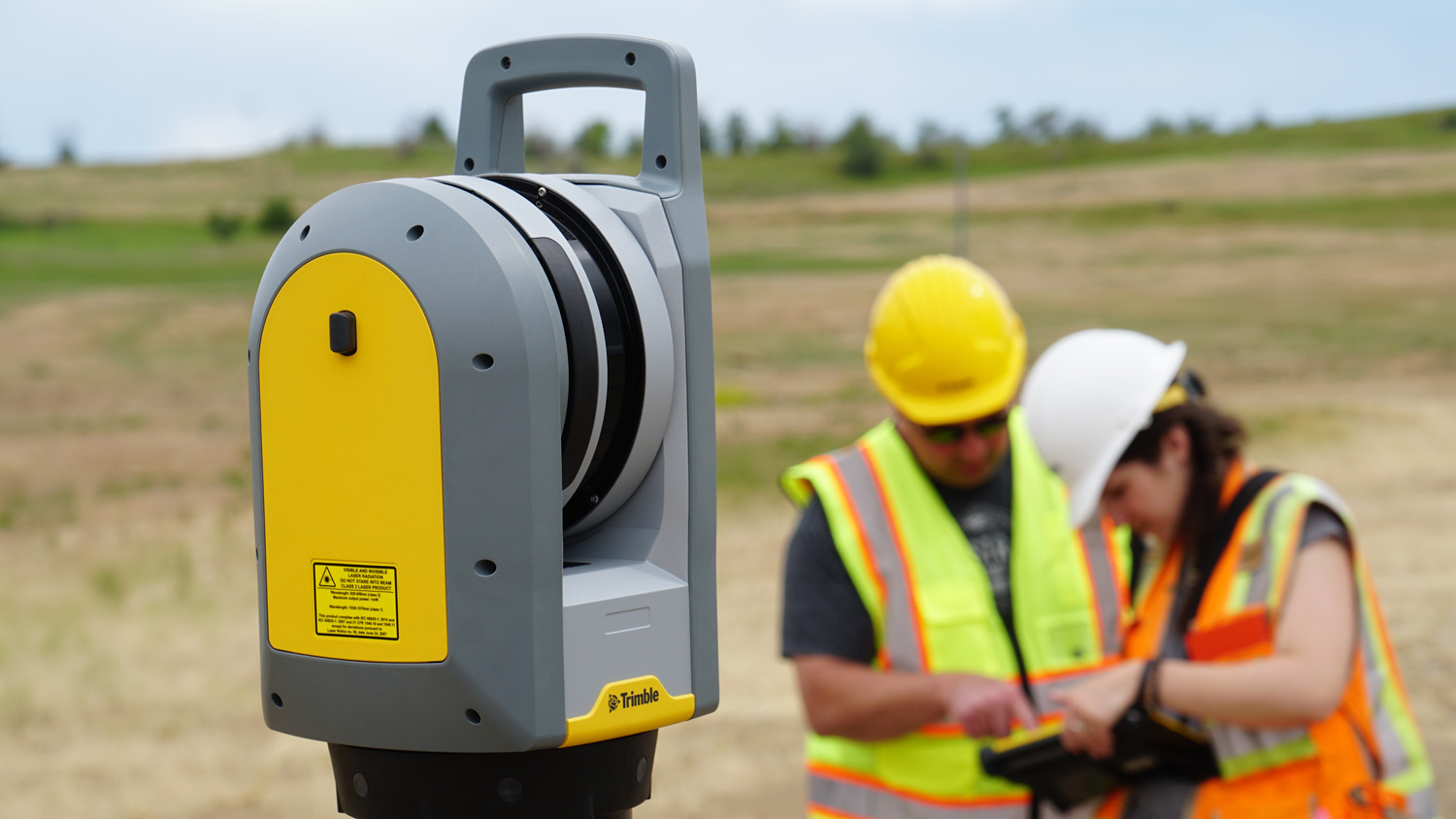
4. Artec 3D
Artec 3D has its very own Artec Leo, a handheld scanner intended to capture small objects at an incredibly high resolution. Most of the applications up until this point have consisted of object scanning related to automotive and aerospace, besides reverse engineering. However, most people come back due to the portability and ease of interface regarding the lineup presented by Artec.

Industry-leading software for 3D Laser Scanning
Software solutions play a major role in transforming these raw data into information on which actionable decisions can be based. Industry-specific software is able to let the teams visualize, process, and make use of point clouds in such a wide range of applications that go from virtual modeling down to the quality control of manufacturing.
Moreover, CAD software is completely integrated with 3D scanning technology in order to provide a ready CAD 3D model to the user and make the whole process from data acquisition to planning easier and faster.
Top Software Solutions in 3D Scanning
1. Autodesk ReCap
Autodesk ReCap offers point cloud processing. It is also compatible with BIM applications.
2. Cintoo Cloud
Cintoo Cloud comes up with a cloud-based point cloud data management service in complex projects over geographically distributed locations, enabling collaboration remotely for quality control. This might prove to be one of the best concepts for not only construction but also infrastructural development processes.
3. RealityCapture
RealityCapture is really at its most brilliant when it comes to either pure photogrammetry and laser scanning data processing to generate high-definition models for any project that requires heritage preservation to virtual simulations.
4. OpenSpace AI
OpenSpace AI performs site documentation with the help of AI; a real-world example could be construction follow-through. It would, therefore, be apt for the operational flows on mobile platforms that provide for quick quality control and efficient project monitoring.
5. DroneDeploy
DroneDeploy AI uses Artificial Intelligence combined with site documentation to observe the real situation of construction progress in real-time. Mobile technologies can support QC and PM easily.
Integrating Hardware and Software for Optimal Project Outcomes
The right 3D laser scanning hardware and software integrations mean streamlined workflows, effectively captured data, and management of the project within the budget. Here is how these solutions play their role toward project success and at what stages of a project:

Enhanced Project Accuracy and Efficiency with Point Cloud Data
3D laser scanning hardware and software ensure that data capture is highly accurate and reduces the possibility of very costly mistakes that allow for project efficiency. With software such as Autodesk ReCap and Cintoo Cloud, iScano provides integrated data processing that construction teams can easily use to track quality control in real time at any time and make changes where necessary.
Improved Collaboration through Cloud-Based Solutions
Web platforms, such as those provided by Cintoo Cloud and DroneDeploy, therefore definitely help a team framework that involves multiple locations over data-heavy projects. It provides visibility of instant access to those in a project, besides remotely managing a project and executing decision-making that especially is applicable in big construction projects.
Cost Savings and Efficiency Gains
While the initial investment in hardware and software might be high, the savings with 3D laser scanning can be great throughout a project.

Emerging Trends in 3D Laser Scanning Technology
The 3D laser scanning industry is continuously in flux. The profession pushes new developments in data creation and usage every day.
Digital Twin, Reverse Engineering, and Augmented Reality Integration
Digital twin means virtual replicas of physical structures used in continuously monitoring conditions and predicting maintenance. Through digital twin powering at iScano, construction teams have been able to virtually interconnect over the project sites and let stakeholders understand the condition on-site for better decision-making upon real-time information.

Factors to Consider When Choosing 3D Laser Scanning Hardware and Software
Selection of the right combination of hardware and software for 3D laser scanning will be chosen based on project-specific factors that include the scope of the project, the budget allowed, and compatibility of the systems. Here is how iScano approaches selecting solutions to meet the project:
- Scale of the project: While the scanners, such as those by Artec 3D, are portable, handheld scanners ready to go for small projects; for large-scale infrastructure developments, robust systems such as the Trimble X7 will be required.
- Detail Accuracy in Data: Projects requiring a great amount of detail may go for structured light scanners or into more advanced photogrammetry, such as RealityCapture, to get high-resolution models.
- Real-time collaboration: Application of the cloud solution-as for multisite projects using Cintoo Cloud or OpenSpace AI-enabling real-time collaboration, while ensuring access from any part of the world anytime, thereby increasing the speed of sharing data and site control.
- Equipment investment: The investment that has to be done in 3D laser scanning is monumental. This always can be vindicated because of costs concerning the long-term great advantage of the reduction in reworks and project delays.

Related Guides
- 3D Scanning Accuracy Standards How tolerances tie back to real hardware and processing workflows.
- How to Choose the Best 3D Scanning Company Evaluate providers by hardware, software, QA, and deliverables.
- 3D Scanning vs Traditional Surveying Methods, use cases, and outcomes that drive tool selection.
Conclusion
Success for projects using 3D laser scanning today is pegged on the integration of industry-leading hardware and software. Be it the advanced accuracy provided by scanners from FARO and Leica or broadened capabilities provided by software solutions like Autodesk ReCap and Cintoo Cloud, having the right tool for the job improves project outcomes across a wide range of applications. Coupled with rapid developments with regard to the requirements of the industry, the mission has been an undertaking on the part of iScano-from its very beginnings-always to deliver what was promised regarding the latest in 3D scanning.
To find out how iScano’s solutions can elevate your project, get in touch with us today and have a look at our services around 3D laser scanning.


